Environmental History
The high ground on each
bank of the Humber Estuary consists of the Yorkshire and Lincolnshire Wolds
of cretaceous chalk and, to the west, the low limestone escarpment leading
to Brough-on-Humber on the north and the Lincoln Edge southwards, separated
from the Wolds by the Ancholme River valley; the Edge is a much more prominent
feature than its northern counterpart. To east and west of this high ground
low-lying, and in olden days marshy, terrain surrounds the estuary and the
rivers which drain into it.
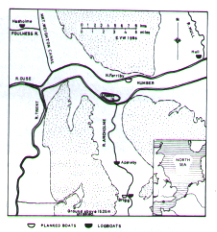
Map of middle Humber showing
boat-sites
During the last Ice Age
what is now the Humber Estuary formed part of 'Lake Humber' which was dammed
by glacial moraine to the east and drained to the south along the Ancholme
Valley. Later, the river cut a channel eastwards to the sea and the River
Ancholme reversed its course and the present drainage system was formed.
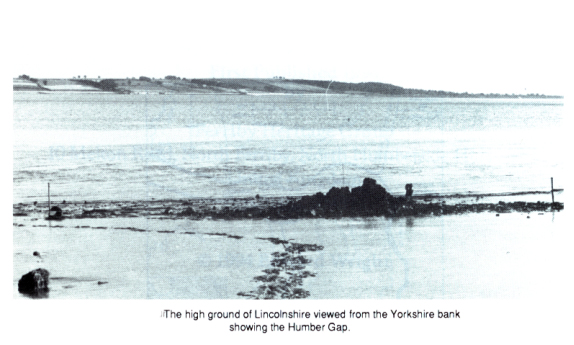
Lincolnshire viewed from
the Yorkshire bank showing the Humber Gap
After glacial retreat at
the end of the last Ice Age a surface of barren Boulder Clay called till was
left, trees began to grow and even today their roots can still be seen following
cracks in the surface of the till.
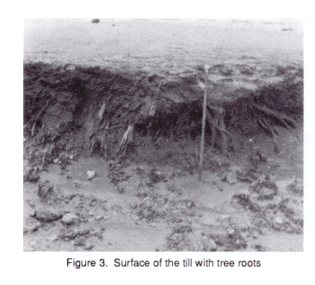
Surface of the till with
tree roots
A woodland of oak and alder
grew up and fallen leaves and branches formed a layer of peat especially in
the hollows, the deepest of which were waterlogged ponds containing many freshwater
snails and other shells.
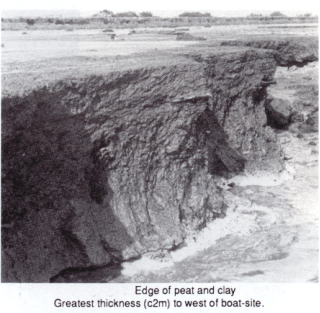
Edge of peat and clay to
west of boat site
Rising sea-levels in Neolithic
and Early Bronze Age times brought tidal salt water up the estuary, poisoning
and drowning the woodland and leaving dead stools of trees on the bank. Sediment
deposited by this incursion formed the silty estuarine clay with many marine
shells (that can be seen today)
From very early Mesolithic times in the case of the Lincoln Edge, the Wolds
and Jurassic escarpment have been heavily settled and used for overland communication.
The estuary would have been a formidable barrier. Ferries crossing it were
registered in the Domesday Book but evidence of much earlier crossings have
been found..
Copyright - Estate of Edward Wright deceased. As extracted from his booklet 'North Ferriby and the Bronze Age Boats'